
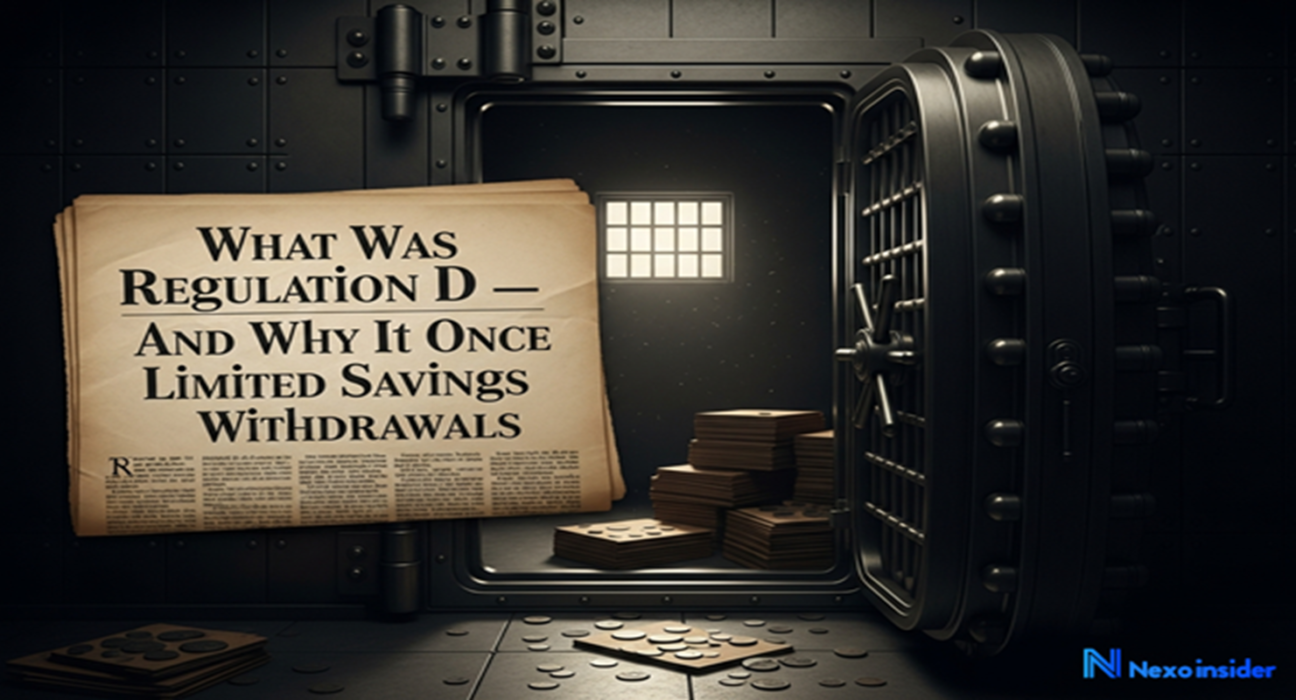
Back in the day, many U.S. savers noticed something odd: even though their savings account held their cash, they couldn’t move money out too many times each month — at least not via online transfers, debit-linked withdrawals, or electronic transfers. That limitation came from Regulation D, a rule set by the Federal Reserve.
Under the original rule, banks were required to treat savings deposits differently than checking (or “transaction”) accounts. Savings accounts were supposed to be for storing money, not frequent spending. Thus, Regulation D capped “convenient” withdrawals or transfers (like online banking, ACH transfers, automatic bill payments, debit withdrawals, etc.) to a maximum of six per month.
Meanwhile, other kinds of withdrawals — like visiting the branch in person, using an ATM, or getting a check mailed — were not counted under the limit.
This distinction helped banks hold appropriate reserves under regulatory requirements, because savings-type deposits were treated differently than everyday transaction accounts.
What Changed — And Why the Rule Is No Longer Enforced
In April 2020, during the onset of the COVID-19 pandemic, the Fed made a big change: it suspended the six-per-month limit for withdrawals/transfers from savings and money-market accounts.
Under the new rule, banks weren’t required to enforce the limit anymore. The reasoning: reserve requirements had dropped to zero, and people needed more flexible access to their funds during those uncertain times.
Important: The rule is suspended, but no law prevents banks from voluntarily maintaining their own limits or fees — and many have done exactly that.
So while on paper there’s no regulatory cap any more, in practice many savings accounts still behave like they’re subject to the old 6-transaction rule.
What That Means for You — Withdrawal Limits, Fees & Real-World Impact
✅ What’s Now Allowed (in Theory)
- You can make unlimited electronic transfers or withdrawals from a savings account, assuming your bank doesn’t enforce a limit.
- You could move money to checking, pay bills, or do online transfers without worrying about hitting a monthly cap.
⚠️ What You Still Need to Watch Out For
- Many banks still enforce the old limit (six “convenient” withdrawals/transfers) — often with fees ($5–$15 per excess, or other penalties) if you exceed that.
- If current account activity is high, or you treat your savings like a checking account, you may repeatedly hit those hidden limits.
- Always check your bank’s terms — because the removal of the federal limit doesn’t forbid stricter bank-specific policies.
In practice, you might still run into the same limitations even though the rule is technically gone.
When Savings Accounts Still Work — And When They Don’t
Savings accounts remain a good place for your emergency fund, short-term savings, or money you don’t plan to touch often. But if you expect heavy activity — like frequent transfers, bill payments, or regular withdrawals — treat them with caution.
✅ Good for Savings Account
- Emergency fund
- Rainy-day cash stash
- Money you want to grow slowly or keep safe
❗ Treat with Caution If
- You need regular access to cash or make frequent transfers
- You rely on savings for recurring automated withdrawals
- You want flexibility in moving money in and out often
For high-frequency transactions or normal day-to-day spending, a checking account or a designated “transaction” account is safer.
What to Do to Avoid Headaches With Your Bank
If you rely on savings for flexibility, here are smart moves to avoid unpleasant surprises:
- Check your account agreement — verify whether your bank still enforces a monthly limit on withdrawals or transfers.
- Use checking for regular transactions — let savings remain a “set-aside” tool, not your daily spending account.
- Plan big transfers wisely — make fewer, larger transfers instead of many small ones (banks that enforce limits may only count number of withdrawals, not amount).
- Avoid overdraft-linked transfers from savings — those often count toward transaction limits under bank policies.
- When in doubt, call your bank — ask directly how many “convenient” transfers are allowed. Policies vary widely even among major banks.
Why This All Still Matters Today
Even though Regulation D’s limit was removed years ago, many banks cling to old systems and keep the six-transaction cap alive. That can catch you off guard if you’re used to thinking of savings as fully liquid.
From a bigger perspective: if you treat savings accounts like everyday wallets — frequent withdrawals, transfers, paying bills — you’re undermining the very purpose of savings accounts. Banks designed them to be for storage and security, not everyday spending. Using them for regular cash flow can trigger fees or restrictions.
Given that, many financial experts still recommend using savings for what it’s best at: holding funds you don’t need right away. For regular spending or bills — use a checking account or a purpose-built account.
Final Thought
Savings accounts are still a useful tool — especially when you treat them as what they’re meant to be: a safe place to park money you don’t need to touch often. The old federal cap on withdrawals under Regulation D was lifted in 2020, giving more flexibility on paper. But because many banks choose to retain their own restrictions, you can’t assume unlimited access is guaranteed.
If you rely on savings for frequent transfers or withdrawals, double-check how your account works — or consider switching part (or all) of that flow to a checking account or transaction-friendly alternative. That way, you keep your money accessible — and avoid annoying fees or surprise account changes.