Skip to content
  • Home
  • About Us
  • Banking
    • Saving Account
  • Contact Us
  • Home
  • About Us
  • Banking
    • Saving Account
  • Contact Us
Nexo Insider Blog Banking Saving Account Swiss Bank Account: What It Is, How It Works & Why It Still Matters?
  • Nexo Insider
  • Swiss Bank Account: What It Is, How It Works & Why It Still Matters?

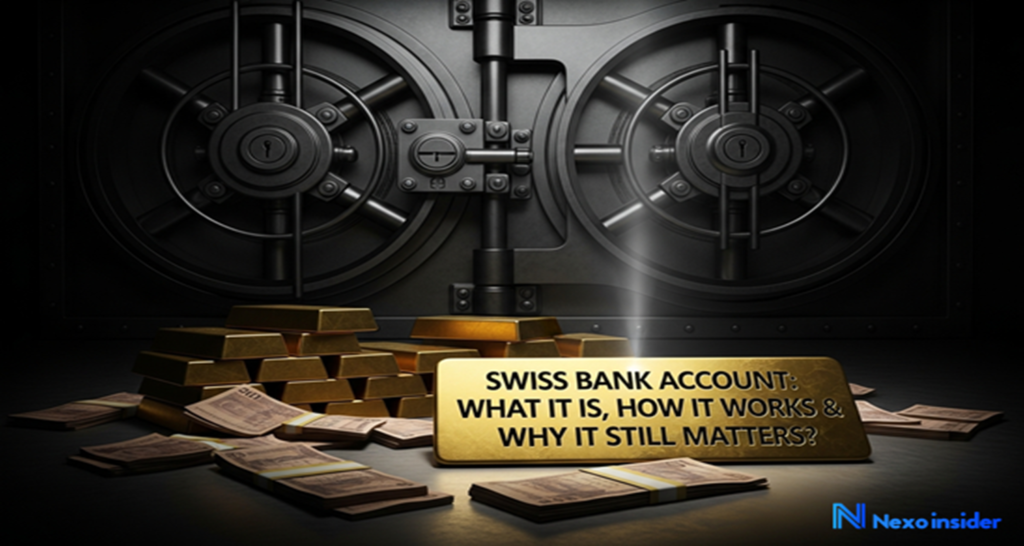
Swiss Bank Account: What It Is, How It Works & Why It Still Matters?

  • By Nexo Insider
  • December 19, 2025
  • Banking, Saving Account

A Swiss bank account has long been one of the most talked-about financial assets in the world, conjuring images of discreet numbered accounts and rock-solid financial security, but what exactly is a Swiss bank account, how does it differ from other bank accounts, and is it still worth considering today?

What Is a Swiss Bank Account?

At its core, a Swiss bank account is simply a bank account held at a financial institution in Switzerland, what sets it apart is not the basic mechanics, you deposit money and the bank holds it for you, but rather Switzerland’s strong financial system and its reputation for security, privacy, and stability.

Swiss banking is governed by strict laws that historically protected the identities of account holders and kept detailed financial information confidential. Although international tax transparency reforms have changed the landscape somewhat, Swiss banks still offer a higher level of discretion and protection than many other jurisdictions.

Swiss Banking Confidentiality: What’s Real and What’s Not

One of the biggest reasons Swiss bank accounts are famous worldwide is the idea of bank secrecy. In the past, Swiss law made it a crime for bankers to reveal customer identities without permission — a provision that made Switzerland synonymous with private banking.

Today, however, many of these secrecy rules have been softened under global tax agreements like the Common Reporting Standard (CRS) and the U.S.’s FATCA. That means Swiss banks now report financial data to tax authorities in an account holder’s home country when required by law.

Key Benefits of Opening a Swiss Bank Account

Swiss bank accounts remain popular for several concrete reasons — especially among international savers and investors. Here are the standout benefits:

1. Stability in a Safe Financial System

Switzerland has one of the strongest and most stable economies in the world, it is political neutrality, robust fiscal policies, and well-regulated banking industry help reduce the risk of financial shocks, making Swiss accounts attractive for preserving wealth.

2. Privacy and Confidentiality

While Swiss banks are no longer completely secretive in the way they once were, they still offer strong protections against public disclosure, and it is generally harder for unauthorized parties to access account information compared to many other countries.

3. Multi-Currency Options & Diversification

Swiss bank accounts often let you hold funds in multiple currencies like Swiss francs (CHF), US dollars (USD), or euros (EUR), which can help protect your savings from currency risk.

4. Wealth Management Expertise

Switzerland has a long tradition of wealth management and private banking services, many Swiss banks provide sophisticated financial planning, investment advice, and estate planning tailored to high-net-worth clients.

Drawbacks and Things to Consider

Swiss bank accounts are attractive, but they’re not for everyone.

1. High Minimum Balances and Fees

Unlike everyday bank accounts, many Swiss banks require substantial minimum balances, often starting in the hundreds of thousands of dollars or more, to open or maintain a premium account.

2. Compliance and Reporting Requirements

USA citizens and others subject to international tax laws must comply with strict reporting rules like FBAR and FATCA when they open a Swiss bank account, failure to report can lead to serious penalties.

3. Opening and Maintaining an Account Isn’t Simple

Swiss banks perform extensive due diligence, meaning you will need to provide proof of identity, source of funds, and other detailed documentation before an account is approved.

Who Should Consider a Swiss Bank Account?

Swiss bank accounts are most appealing to:

  • High-net-worth individuals who want international diversification
  • People seeking strong depositor protection and financial stability
  • Investors who want access to multi-currency accounts and global wealth management

That said, they are less suited for everyday domestic banking needs or for people with modest savings, because costs and reporting obligations can outweigh the benefits.

Final Thought

A Swiss bank account still holds a unique place in global finance. While the era of total secrecy has faded under modern transparency standards, switzerland’s banking system remains a symbol of financial security, discretion, and stability, for wealthy individuals and international investors, Swiss accounts can play an important role in diversification and asset protection, but they come with higher costs, documentation requirements, and tax compliance responsibilities. In 2025, they’re less about hiding money and more about strategic global financial planning.
Leave feedback about this Cancel Reply

  • Quality
  • Price
  • Service

PROS

+
Add Field

CONS

+
Add Field
Choose Image
Choose Video

Recent Posts

  • by Nexo Insider
  • December 17, 2025

What Is a Savings Club? How These Group Saving Systems Work

Banking Saving Account
  • by Nexo Insider
  • December 18, 2025

What Is a Savings Account?

Banking Saving Account
  • by Nexo Insider
  • December 18, 2025

Money Market Account vs Savings Account: Which One Should You Pick?

Banking Saving Account
  • by Nexo Insider
  • December 18, 2025

How to Get the Best Savings Interest Rates for Your Money

Banking Saving Account
  • by Nexo Insider
  • December 19, 2025

Understanding Health Savings Accounts (HSA): What You Need to Know?

Banking Saving Account
  • by Nexo Insider
  • December 19, 2025

Should You Open a Foreign Savings Account? What You Should Know

Banking Saving Account

Follow Us

Instagram Facebook Threads Pinterest X-twitter Linkedin

Recent Articles

What Is a Merchant Bank? Functions, Services, and Real-World Examples

What Is a Merchant Bank? Functions, Services, and Real-World Examples

January 30, 2026

When you think of a bank, you might imagine the place where you deposit your paycheck, apply for a credit card, or

What Is a Financial Institution?

What Is a Financial Institution?

January 30, 2026

Financial institutions (FIs) are the backbone of the global economy. whether you are depositing money into a savings account, applying for a

Bank Account Number What It Is and How It Works

Bank Account Number What It Is and How It Works

January 30, 2026

Bank account number is crucial for managing your finances, securing money and preventing fraud. Digital world, banking has shifted from checkbooks to

How Do Commercial Banks Work and Why Do They Matter?

How Do Commercial Banks Work and Why Do They Matter?

January 30, 2026

Commercial bank are important in the finance. whether you’re depositing your paycheck, applying for a mortgage, or simply swiping your debit card at

FedNow: What It Is and How It Works

FedNow: What It Is and How It Works

January 30, 2026

The Federal Reserve made headlines in July 2023 when it launched FedNow, a groundbreaking instant payment service designed to transform the way

What Happened at Credit Suisse, and Why Did It Collapse?

What Happened at Credit Suisse, and Why Did It Collapse?

January 30, 2026

The collapse of Credit Suisse, one of Switzerland’s most prestigious and long-standing financial institutions, shocked the global banking industry in March 2023.

Tier 1 Capital Ratio: Understanding the Backbone of Banking Stability

Tier 1 Capital Ratio: Understanding the Backbone of Banking Stability

January 30, 2026

When we talk about the strength of a bank, there is one number that regulators, investors, and even governments look at closely—the

What Are Residential Mortgage-Backed Securities (RMBS)? Benefits and Risks

What Are Residential Mortgage-Backed Securities (RMBS)? Benefits and Risks

January 30, 2026

Residential Mortgage-Backed Securities (RMBS) are important financial instruments link the housing market with global investors. by pooling together residential mortgages, these securities give

Deposit: Definition, Meaning and Types.

January 29, 2026

When you hear the word deposit, it might bring to mind that moment when you hand over money at a bank, leave

APR vs. APY: What’s the Difference?

January 29, 2026

When it is comes to personal finance, APR (Annual Percentage Rate) & APY (Annual Percentage Yield) are two that confuse people. both involve interest,

Native American-Owned Banks by State

January 29, 2026

When we talk about financial inclusion in America, one often-overlooked yet vital component is the role of Native American-owned banks and credit

Choosing a New Bank? Consider These Factors First

January 29, 2026

Selecting a bank may seem straightforward, but it can significantly influence your financial well-being. the right bank helps you save money, earn

Banking Saving Account

What Is a Savings Club? How These Group Saving Systems Work

A savings club is an informal or formal savings arrangement where individuals contribute money regularly into a shared pool with.

  • December 17, 2025
  • 4 minutes read
Banking Saving Account

What Is a Savings Account?

A savings account is one of the simplest and most foundational financial tools anyone can use to protect and grow.

  • December 18, 2025
  • 4 minutes read
Money Market Account vs Savings Account
Banking Saving Account

Money Market Account vs Savings Account: Which One Should You Pick?

When you’re deciding where to park your hard-earned cash, the financial landscape sure offers plenty of choices. Two popular options.

  • December 18, 2025
  • 4 minutes read
  • Home
  • About Us
  • Contact Us
  • Disclaimer
  • Privacy Policy
  • Terms & Condition
© 2026 Nexo Insider All Rights Reserved.
Go to mobile version