
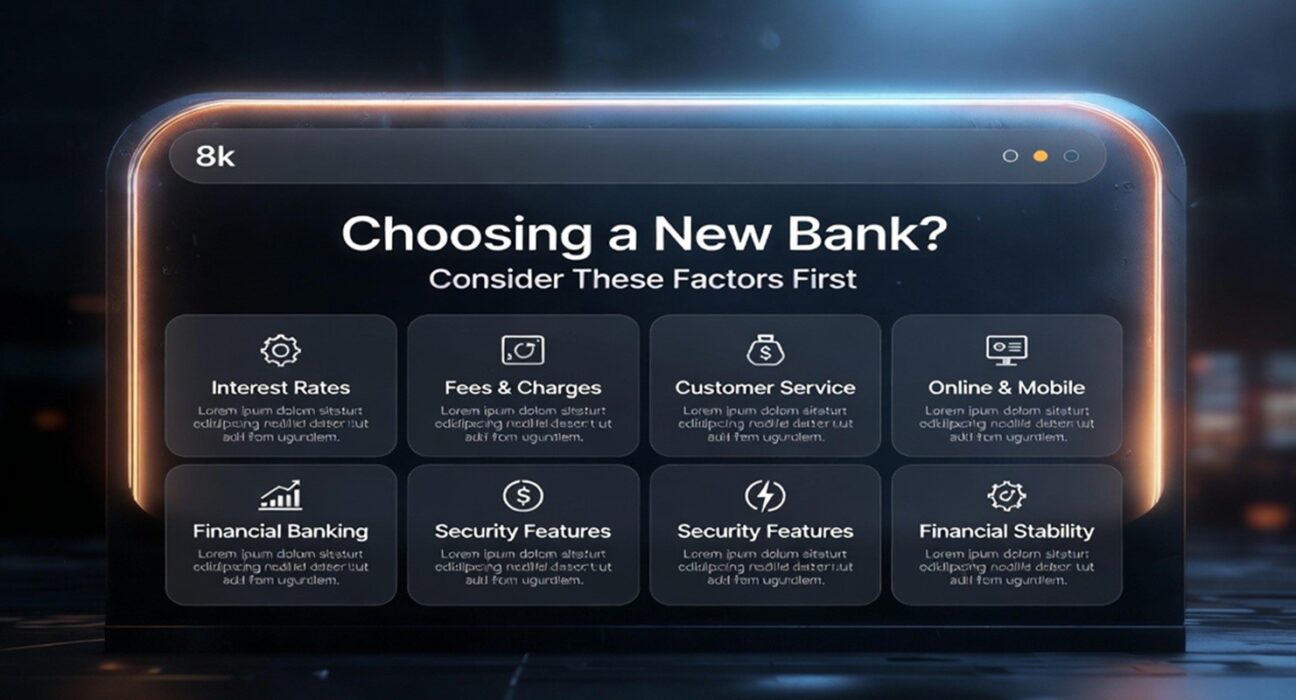
Selecting a bank may seem straightforward, but it can significantly influence your financial well-being. the right bank helps you save money, earn interest, and access useful tools. the wrong one may drain your funds through unnecessary fees. With traditional banks, online banks, and credit unions all competing for your attention, it’s important to carefully evaluate your options before committing.
Types of Banks
The first decision is deciding what type of bank suits your needs.
Traditional Banks
These are the familiar brick-and-mortar institutions with branches and ATMs across the country. they offer face-to-face service and a wide range of products. their downside is higher fees and lower savings interest rates compared to other options.
Online Banks
Operating primarily through apps and websites, online banks typically offer lower fees and higher interest rates thanks to reduced overhead. they are convenient for tech-savvy customers but lack in-person support and may limit cash deposit options.
Credit Unions
Credit unions are member-owned, not-for-profit organizations. they often provide better rates and lower fees while maintaining a community focus. However, they may have membership restrictions and fewer digital tools compared to larger banks.
Tip: No matter which you choose, make sure the institution is insured—FDIC for banks or NCUA for credit unions—protecting up to $250,000 per depositor.
Fees That Can Eat Into Your Balance
Bank fees can quickly add up if you’re not careful. common charges include:
- Monthly maintenance fees
- Overdraft fees
- Out-of-network ATM fees
- Wire transfer or cashier’s check fees
Some banks waive fees if you maintain a minimum balance or set up direct deposit. Always compare fee schedules before opening an account—choosing a low-fee option can save hundreds each year.
Interest Rates on Savings
If you’re opening a savings account, pay close attention to the Annual Percentage Yield (APY). Traditional banks often offer very low rates, while online banks and credit unions frequently provide higher APYs.
Extra Features and Tools
Banks now compete by offering more than just basic accounts.
Features to consider include:
- Mobile apps with budgeting tools
- Mobile check deposit and bill pay
- Zelle or peer-to-peer payment options
- Wide ATM access for travelers
- Automatic savings transfers
Think about how you use your accounts daily. A user-friendly mobile app or large ATM network might matter more than a slightly higher interest rate.
Security Measures
With rising online fraud, bank security should be a top priority. Look for:
- Two-factor authentication
- Fraud monitoring and alerts
- Data encryption
- Zero-liability fraud protection
Checking recent news about security breaches can also help you avoid risky institutions.
Customer Service Matters
Even if you bank mostly online, you’ll eventually need support. Evaluate:
- Availability of 24/7 service
- Options for phone, chat, or email support
- Customer reviews on problem resolution
Sometimes paying slightly higher fees is worthwhile if it means getting reliable, fast customer assistance when you need it.
Accessibility and Convenience
Ask yourself:
- Is there a branch or ATM nearby?
- Can I deposit cash or checks easily?
- Does the bank offer services in cities I travel to?
A Bank’s Reputation and Stability
Lastly, consider the institution’s financial health and public reputation. Long-standing banks and credit unions often provide greater peace of mind. customer reviews, ratings from financial agencies, and the bank’s history can give you insights into it is reliability.
Peace of mind is perhaps the most valuable service a bank provides.
Conclusion
Choosing a bank is not just about convenience—it’s about protecting and growing your money. By comparing bank types, fees, interest rates, features, security, and reputation, find the best fit for your lifestyle and goals. The bottom line: a good bank is one that is affordable, accessible, secure, and trustworthy. Don’t hesitate to switch if your current bank no longer meets your needs—your financial future deserves the best possible partner.