
If you’re a non-USA citizen and you’re wondering whether you can open a savings or checking account in the USA, the answer is: yes, it’s often possible, though there are extra hoops compared to USA, residents. How hard it is depends a lot on the bank or credit-union and what documentation you can provide.
What Banks Expect from Non-Citizens
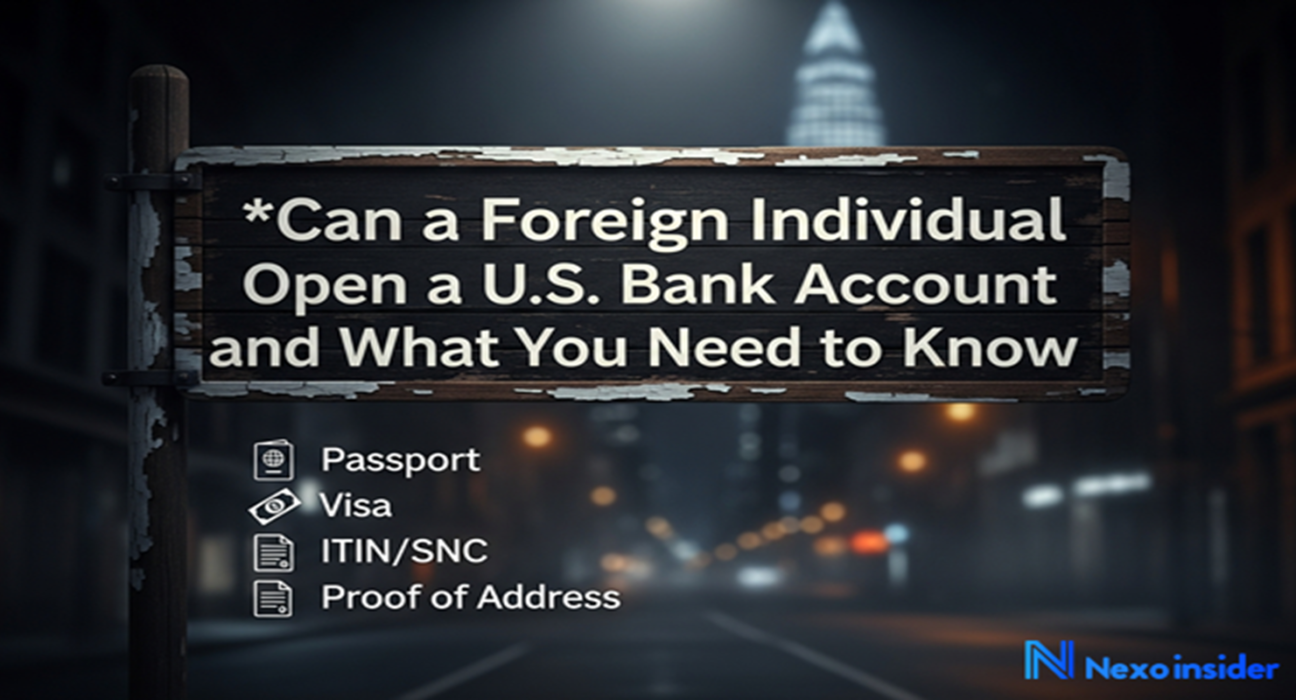
Banks in the USA, generally require several forms of verification when non-citizens apply to open an account. While the exact requirements can vary from institution to institution, the core checklist usually includes:
• Valid Photo ID
You’ll need to present a government-issued ID that includes your photo and nationality, often a passport, or (if you have one) a USA, visa, work permit, or other immigration documentation.
• Proof of a USA, Address
Most banks expect an address within the USA,. to associate with the account. Acceptable proof can be a recent utility bill, lease agreement, or other documents that clearly show both your name and a USA, address.
• Tax Identifier (SSN or ITIN) or A Plan Without One
Many banks ask for a Social Security Number (SSN) if you have one. If not, non-citizens can often use an Individual Taxpayer Identification Number (ITIN), which you can get from the USA, Internal Revenue Service.
In some cases, if you don’t have either SSN or ITIN, some banks may still open an account, but typically a non-interest-bearing one (i.e., you won’t earn interest) or with limited services, since interest earnings trigger tax-reporting obligations.
• Physical In-Person Appearance (Often Required)
Because of strict regulation laws (especially after 2001), many banks require non-citizens to apply in person, even if the initial application was started online. That means you might need to show up at a branch with your documents.
• Initial Deposit or Minimum Balance (Depending on the Bank)
Some banks might ask for a small opening deposit (e.g., $25–$50) to activate the account. Others might allow zero-balance opening but could require minimum balances to avoid fees.
What Challenges and Limitations Foreigners Face
While it’s possible, non-citizens (and especially non-residents) often run into a few extra obstacles. Here’s what to watch out for:
- Not all banks accept non-residents or people with foreign IDs, some USA, banks only open accounts for USA, citizens or lawful permanent residents.
- Online-only banks are often off-limits, many of these require SSN, resident addresses, or avoid foreign-held applications altogether. If you don’t have an SSN/ITIN, a physical bank branch is more likely to help.
- Extra scrutiny under compliance rules, because of anti-money laundering (AML) and customer-identification (CIP) laws, banks may ask for more paperwork, proof of source of funds, and expect stricter verification from foreigners.
- Some restrictions on account features, non-interest-bearing accounts, limited services, or higher fees might be part of the deal if you don’t have a tax ID or permanent residency.
All that said, many international students, visa holders, immigrants, and even non-resident foreigners successfully open USA, accounts every year. The key is: documentation and patience.
Practical Steps to Open a USA, Bank Account as a Foreigner
If you want to try, here’s a step-by-step guide:
- Choose banks known for serving foreigners or immigrants, big banks and some credit unions are more likely to accept foreign IDs and ITINs.
- Gather your paperwork, valid passport (or visa/immigration ID), proof of USA, address (or letter/document with address), and an SSN or ITIN if you have/obtain one.
- Go to a physical branch in person, especially if you don’t have SSN or ITIN or have foreign ID. Online account opening is often not allowed for non-citizens.
- Ask about account type and requirements, verify whether interest-earning accounts are allowed under your documentation status, check any minimum balances or fees.
- Make the initial deposit (if required), some banks need a small deposit to activate; bring funds or be prepared for transfer details.
- Understand any limitations, some services (like mobile banking, credit cards, high-balance accounts) might have restrictions for non-residents.
What About Non-Residents Living Outside the USA,?
If you don’t actually live in the USA, or have a USA, address, opening a traditional USA, bank account becomes significantly harder. Many banks will reject those applications outright.
That said, a few alternative paths exist:
- International banks with USA, branches or subsidiaries, if your home-country bank has a relationship with a USA, bank, sometimes you can leverage that to open a USA, account.
- Fintech / neo-bank alternatives, some digital financial platforms and global “dollar-accounts” may offer USA,-style banking services (routing/account number, USD balances), though they may not fully replace a traditional bank account and may have limitations or fees.
- Consider trade-offs carefully, tax reporting, currency exchange, account access, and compliance can become more complicated if you’re not regularly residing in the USA,
When It Makes Sense and When It Doesn’t
Opening a USA, bank account as a foreigner can be very useful if:
- You do business in USA, dollars (freelancing, remote work, international trade).
- You travel frequently or plan to live/work in the USA, temporarily.
- You need a reliable USA, banking presence to receive payments, pay USA, vendors, or handle USA,-denominated expenses.
But if you only occasionally need USA, banking services, and you don’t have a USA, address or tax ID, the friction might not be worth it. In that case, sticking with banks in your home country or using international payment solutions may be simpler.
Final Thought
Yes, foreigners and non-USA, citizens can open a bank account in the United States. But it isn’t always straightforward. You’ll need to provide valid ID, proof of address, possibly an SSN or ITIN, and often appear in person at a branch. Rules can vary wildly from bank to bank, so doing a little homework before you visit can save you a lot of head-pain.