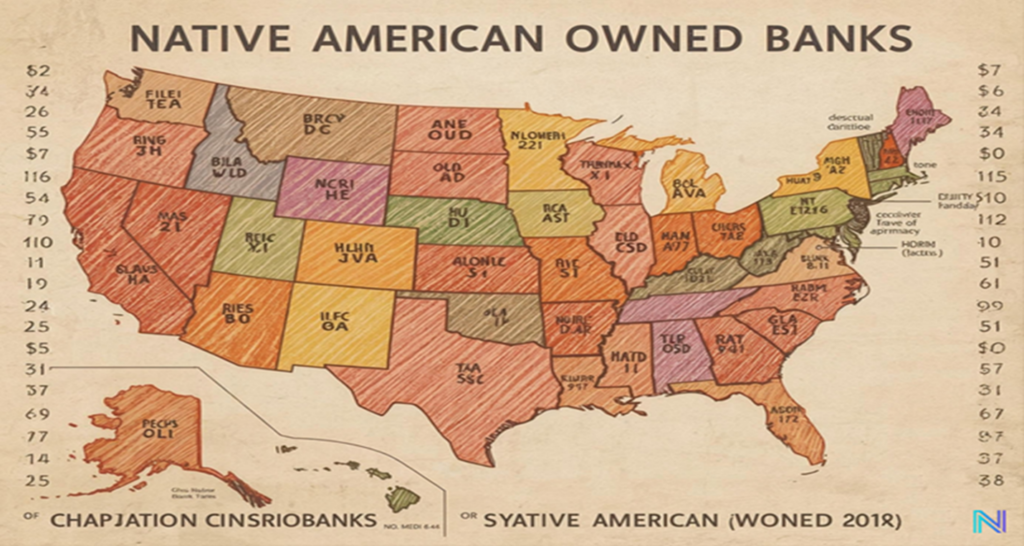
When we talk about financial inclusion in America, one often-overlooked yet vital component is the role of Native American-owned banks and credit unions. While they make up the smallest category of minority depository institutions (MDIs), their importance to tribal communities and beyond cannot be overstated. These institutions were born from necessity—tribes and tribal members establishing banks to serve their communities when mainstream financial systems largely ignored them.
Introduction to Native American-Owned Banks
Native American-owned banks are a lifeline for tribal communities across the USA. FDIC recognizes 20 Native american owned banks where 51% of the voting stock is held by native american or native alaskan individuals. 11 Native-owned credit unions exist, bringing essential banking services to communities that often face systemic barriers to financial access.
What Is a Minority Depository Institution (MDI)?
The FDIC defines a Minority Depository Institution (MDI) as a bank or savings institution where:
- 51% or more of voting stock is owned by minority individuals, OR
- A majority of the board of directors are minorities, and the bank primarily serves minority communities.
Native American-owned banks fall under this definition due to their tribal ownership and management structures. these institutions often also qualify as Community Development Financial Institutions (CDFIs), meaning they receive support for driving economic development in underserved areas.
Why Native American-Owned Banks Are Important
For many Native American communities, access to mainstream financial services is limited. A 2017 report from the Native Nations Institute highlighted that residents of tribal reservations often travel over 12 miles to the nearest bank and 7 miles to the nearest ATM. In extreme cases, those numbers can soar to 88 and 61 miles respectively.
Research shows individuals raised in these areas:
- Have 7–10 points lower credit scores.
- Experience 2%–4% higher delinquency rates.
- Are 20% less likely to have a credit report.
These disadvantages compound systemic poverty, where 1 in 4 Native Americans lives below the poverty line. by bringing banking closer to tribal lands, Native-owned banks reduce barriers, improve credit scores, and support long-term economic empowerment.
Challenges Faced by Native Communities in Banking
Despite progress, Native communities still face unique challenges in financial services:
- Geographic isolation – Many reservations are rural and far from urban financial hubs.
- Limited broadband access – Online banking solutions often fail due to weak internet infrastructure.
- Credit disparities – Historical exclusion leaves many without credit histories.
- Distrust of mainstream banks – Past exploitation fuels reliance on community-owned institutions.
Native American-Owned Banks and Credit Unions by State
Below is a state-by-state breakdown of Native-owned banks and credit unions, their services, and impact.
Alaska
- Tongass Federal Credit Union – Founded in 1963, offers personal and business accounts, loans, and services across multiple branches in Southeast Alaska.
Arizona & New Mexico
- First American Credit Union – Navajo Land Credit Union (1962), serving both Arizona and New Mexico with personal and business banking.
Colorado & Montana
- Native American Bank, N.A. – Established in 2001 by 20 Tribal Nations, it remains the only national American Indian-owned development bank.
Hawaii
- Hawaii First Federal Credit Union – Founded in 1956, focuses on poverty alleviation.
- Local Union 1186 IBEW Federal Credit Union – Established for electrical workers, now community-serving.
- Molokai Community Federal Credit Union – Founded in 1951, serving Molokai residents.
Iowa
- Pinnacle Bank – Established 1927, offering both personal and tribal trust services.
Minnesota
- Woodlands National Bank – Owned by Mille Lacs Band of Ojibwe, with seven branches across Minnesota.
Missouri
- People’s Bank of Seneca – Founded in 1996, majority owned by the Eastern Shawnee Tribe.
Mississippi
- Choctaw Federal Credit Union – Serving Choctaw community since 1976.
Montana
- Eagle Bank – Owned by the Confederated Salish and Kootenai Tribes.
- Wolf Point Federal Credit Union – Serving community since 1963.
New Mexico
- Four Corners Federal Credit Union – Established 1965, community credit union.
New York
- Seneca Nation of Indians Federal Credit Union – Opened in 2015 to serve Seneca Nation members.
North Carolina
- Lumbee Guaranty Bank – Founded in 1971, now one of the largest Native-owned banks.
North Dakota
- Turtle Mountain State Bank – Established 2007, first privately-owned Native bank on a reservation.
Oklahoma (Largest Native-Owned Banking Hub)
- AllNations Bank – Absentee Shawnee Tribe owned.
- Local Bank (formerly Bank of Cherokee County) – Deeply tied to Cherokee Nation.
- Carson Community Bank – Nearly a century-old institution.
- Chickasaw Community Bank – Established 2002, highly rated.
- F&M Bank – Second-largest Native-owned bank.
- First National Bank & Trust Co. – Citizen Potawatomi Tribe owned.
- FirstBank – With assets over $590 million.
- Gateway First Bank – The largest Native-owned bank in the U.S., with assets exceeding $2 billion.
- Pauls Valley National Bank – Family-owned with tribal ties.
South Dakota
- Lakota Federal Credit Union – Founded 2012 on Pine Ridge Reservation.
- Sisseton-Wahpeton Federal Credit Union – Serving since 1979.
Texas
- The First State Bank – Established in 1956, serving multiple cities.
Wisconsin
- Bay Bank – Founded by the Oneida Nation, strong in mortgage lending.
- Lac Courte Oreilles Federal Credit Union – Opened in 2001 for tribal members.
The Oldest Native American-Owned Bank
While the official charter for many institutions came later, the oldest lineage traces back to AllNations Bank, originally chartered in 1901 as the First National Bank of Calumet. It became Native-owned in 2004 under the Absentee Shawnee Tribe.
The Largest Native American-Owned Bank
The largest native bank is Gateway First Bank, with over $2 billion in assets, it outpaces other tribal banks and plays a central role in expanding access to capital for Native communities.
How Native-Owned Banks Support Economic Growth
Beyond providing checking accounts and loans, Native-owned banks drive economic empowerment through:
- Small business lending – Helping Native entrepreneurs grow.
- Housing programs – Offering HUD Section 184 Indian Home Loans.
- Community reinvestment – Supporting scholarships, health, and infrastructure.
- Cultural preservation – Ensuring financial systems respect tribal values.
Future of Native American Financial Institutions
The future of Native-owned banks is promising. Trends point toward:
- Digital banking expansion – Overcoming broadband barriers with mobile-first solutions.
- Partnerships with fintechs – Bringing modern banking to rural communities.
- Growth in CDFI certifications – Unlocking federal funding for development.
Increased tribal sovereignty – Financial independence strengthens self-governance.