Saving money isn’t easy when you’re living paycheck to paycheck, between rent, utilities, food, and everyday expenses, putting money aside can feel almost impossible, that is exactly why an Individual Development Account (IDA) exists — to help low- to moderate-income individuals build savings with real, tangible incentives.
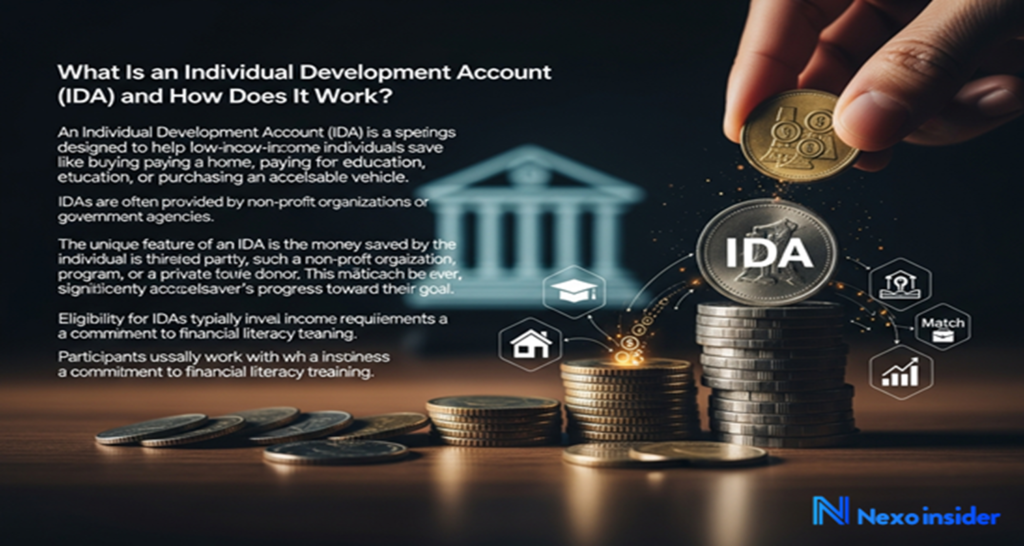
An Individual Development Account (IDA) is a special savings program designed to encourage people to save toward specific life-changing goals, what makes it unique is the matching contribution feature, which means every dollar you save can be matched, sometimes dollar for dollar or even more, by a sponsoring organization.
The Purpose Behind Individual Development Accounts
IDAs aren’t meant for everyday spending or casual savings, they are purpose-driven accounts created to help people achieve long-term financial stability, these programs are often supported by nonprofits, community organizations, or government-funded initiatives.
The main goal of an IDA is to help participants build assets — not just income, assets create opportunity, security, and independence, instead of encouraging short-term spending, IDAs focus on meaningful financial milestones that can change someone’s future.
How an IDA Works in Simple Terms
An Individual Development Account works a bit differently from a traditional savings account.
Here’s how it typically plays out:
- You enroll in an approved IDA program through a sponsoring organization.
- You deposit money regularly into your IDA savings account.
- The organization matches your savings at a set ratio.
- Once you reach your savings goal, the combined funds are used for an approved purpose.
For example, if your program offers a 2:1 match, saving $1,000 could turn into $3,000 toward your goal, that’s real leverage, and a powerful motivation to keep saving.
What Can IDA Funds Be Used For?
Unlike normal savings accounts, IDA funds can only be used for qualified purposes, these usually include:
Buying a First Home
Many IDA programs help participants save for a down payment or closing costs, for someone struggling to break into homeownership, the matching funds can make a huge difference.
Paying for Education or Training
IDA savings can be used for tuition, books, or fees related to higher education, certification programs, or job training that improves long-term earning potential.
Starting or Expanding a Small Business
Some IDAs allow funds to be used as startup capital for a small business, this helps entrepreneurs who may not qualify for traditional loans get their ideas off the ground.
Each program defines its own approved uses, so it’s important to understand the rules before enrolling.
Who Qualifies for an Individual Development Account?
Eligibility for an IDA is usually based on income and net worth, but requirements vary by program.
In general, you may qualify if:
- Your income falls below a certain threshold (often tied to local median income levels)
- Your net worth is limited
- You are willing to commit to regular saving and program participation
Many IDA programs also require participants to complete financial education classes, these sessions often cover budgeting, credit management, saving strategies, and goal planning, while this may sound like extra work, most participants find it extremely helpful.
Why IDAs Are Different From Traditional Savings Accounts
At first glance, an IDA might look like a regular savings account — but the differences are significant.
Matching Contributions
This is the biggest advantage. Traditional savings accounts don’t multiply your deposits. IDAs do.
Goal-Focused Structure
IDAs are designed for long-term goals, not impulse spending, this structure helps participants stay disciplined and motivated.
Education and Support
Most programs pair savings with financial education, creating long-term habits instead of short-term fixes.
Restricted Withdrawals
While restrictions can feel limiting, they protect your progress and ensure the money goes toward meaningful outcomes.
Potential Drawbacks to Consider
IDAs are powerful tools, but they’re not perfect for everyone.
Some limitations include:
- Limited availability: IDA programs aren’t offered everywhere, and funding can be limited.
- Strict rules: Funds can only be used for approved purposes.
- Time commitment: Programs may require regular deposits, meetings, and classes.
- Program caps: There’s often a maximum amount you can save and receive in matching funds.
That said, for eligible participants, the benefits usually far outweigh the restrictions.
How IDAs Help Build Long-Term Financial Stability
One of the biggest advantages of an Individual Development Account is that it helps people break cycles of financial insecurity.
Instead of just covering short-term needs, IDAs support:
- Asset ownership
- Improved earning potential
- Financial confidence
- Better money habits
Participants don’t just walk away with savings — they leave with skills, structure, and a clearer financial path forward.
Are Individual Development Accounts Still Relevant Today?
Absolutely, in an economy where housing costs, education expenses, and startup capital continue to rise, IDAs remain a practical solution for people who need a boost, not a handout.
They encourage personal responsibility while offering meaningful support, for many families and individuals, an IDA becomes the bridge between surviving financially and actually moving ahead.
Final Thought
An Individual Development Account (IDA) is more than just a savings account, it is a structured opportunity to build a better financial future, by combining disciplined saving, matching contributions, and financial education, IDAs help people reach goals that might otherwise feel out of reach.