Stashing your cash in a regular bank savings account might feel safe, but these days many of them pay interest rates so low that your money barely grows, and often doesn’t keep up with inflation, if you want your savings to work harder while keeping risk relatively low, there are several better options worth exploring.
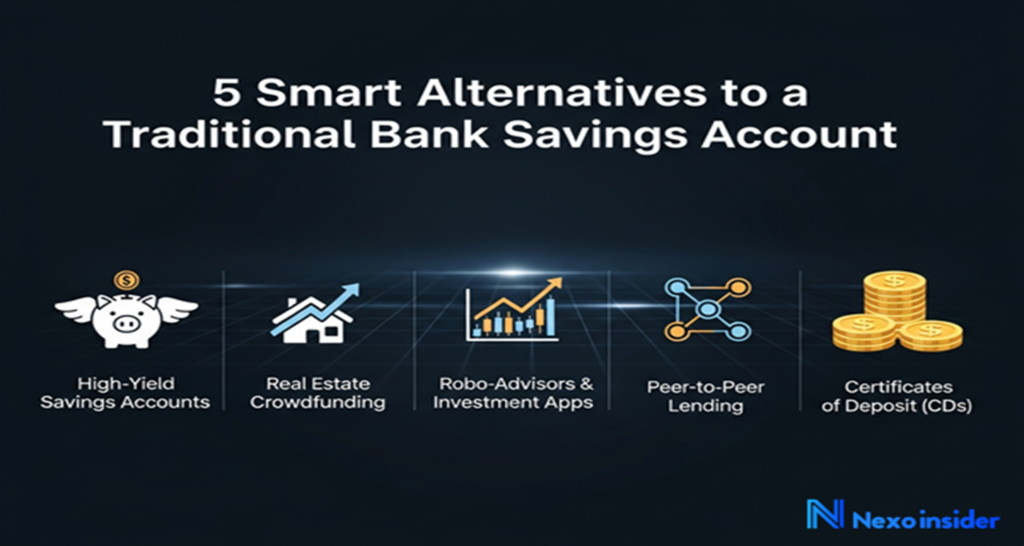
1. High-Yield Savings Accounts — More Interest, Same Safety
One of the simplest alternatives to a basic savings account is a high-yield savings account (HYSA).
Why It’s a Great Option
- FDIC-insured up to $250,000, just like regular bank accounts.
- Rates can range from around 3% up to about 5% APY or more, depending on the bank and conditions.
- You still have easy access to your cash when you need it.
A popular example is the Varo high-yield savings account, which can pay up to 5.00% APY on smaller balances with qualifying direct deposits.
Best for: Emergency funds, short-term savings, or any money you want to keep liquid with better growth than a basic savings account.
2. Money Market Accounts — Higher Returns + Checkwriting Flexibility
If you like the idea of a savings account but want a bit more flexibility, a money market account (MMA) might be a smart alternative, these are still deposit accounts, usually FDIC-insured, but often come with higher interest than traditional savings and features such as check writing or debit access.
What Makes Money Market Accounts Different
- Higher potential interest than standard savings.
- Some banks allow limited check writing or debit card access.
- Still backed by FDIC insurance.
Best for: Emergency funds and everyday savings with the convenience of a checking account but better interest.
3. Certificates of Deposit (CDs) — Lock It In for Guaranteed Growth
If you know you won’t need a chunk of money for a set period, Certificates of Deposit (CDs) are a straightforward way to earn significantly higher interest than a typical savings account.
How CDs Work
When you open a CD, you agree to leave your money untouched for a fixed term — whether that’s three months, one year, or even five years. In return, banks typically offer higher interest rates compared to regular savings.
Here’s what to expect:
- Fixed interest rates — know exactly what you’ll earn at maturity.
- FDIC insured — safe up to $250,000 per depositor.
- Penalties may apply if you withdraw early.
Best for: Medium-term funds you won’t need to touch — like saving for a big purchase or keeping cash earmarked for a future goal.
4. Treasury Securities — Government-Backed Safety With Competitive Returns
For those wanting a low-risk alternative outside of bank accounts, U.S. Treasury securities — such as T-bills, T-notes, and T-bonds — can be a strong choice. These are essentially loans you make to the U.S. government, and they’re widely considered among the safest investments in the world.
Why Treasury Securities Matter
- Backed by the full faith and credit of the U.S. government.
- Short-term T-bills mature in as little as 4 to 52 weeks and can provide competitive yields.
- You can buy them directly via TreasuryDirect.gov or through brokerage accounts.
Best for: Funds you don’t need immediately, with a strong emphasis on principal safety.
5. Peer-to-Peer (P2P) Lending — Higher Yields With Some Risk
If you’re willing to step a little outside traditional banking products and chase significantly higher returns, peer-to-peer lending (P2P) is worth a look. Platforms like LendingClub or Prosper let you lend money directly to borrowers — and you earn interest as they repay.
How P2P Lending Works
- You invest in small portions (“notes”) of loans made to individuals or small businesses.
- Returns can be higher than bank savings or CDs — but risk is also elevated.
- Diversification is key: spreading your money across many loans helps reduce the risk of a single default hurting your entire portfolio.
Best for: Savers willing to accept more risk in pursuit of higher returns.
Bonus Options to Consider
If you’re thinking outside the traditional box, other alternatives can also serve as complements to savings accounts:
- Cash Management Accounts — offered by brokerages that combine savings with checking and investment functionality. These may offer better rates than traditional savings while keeping liquidity.
- Sweep Programs — brokerage features that automatically move idle cash into FDIC-insured accounts or short-term investments to earn more interest.
- Money Market Mutual Funds — slightly different from bank money market accounts, these mutual funds invest in short-term debt and aim to preserve capital while earning interest.
Choosing the Right Alternative for You
Deciding where to keep your savings depends on your goals, timeline, liquidity needs, and risk tolerance:
- Need quick access and a balance between safety and yield? High-yield savings or money market accounts are solid.
- Saving for a future goal and can lock money away? CDs or Treasuries might be ideal.
- Want higher returns and are comfortable with risk? P2P lending or other investment vehicles could be appropriate.
- Looking for a blend of features? Cash management or sweep programs might fit.
In all cases, make sure your funds are protected (e.g., FDIC-insured for banking products) and that you understand the conditions — like minimum balances, early withdrawal penalties, or potential losses.
Final Thought
Your money should not sit idle in a low-interest savings account if better options exist that suit your situation, whether you prioritize safety, liquidity, or higher returns, there’s an alternative that lets your savings grow more effectively, from high-yield savings accounts and CDs to Treasury securities and peer-to-peer lending, each choice brings its own mix of benefits and considerations.